Showing posts with label Consolacion. Show all posts

Laag-Laag sa Cebu (Part 3): Feasting on Consolacion’s Fresh Talaba

A Dinner of Fresh Talaba in Consolacion, Cebu


It’s evening and me and my officemates (those who was also sent to Cebu for an office errand) are looking for something to eat. We didn’t want the usual burgers and fried chickens in the town’s SM Shopping Mall. We are in Cebu and we wanted to eat local.

Good thing that a tricycle driver pointed us in the right direction. He brought us here:

Ruben's Fresh Talaba in Consolacion, Cebu

The trike driver promised that this is the place to taste the best talaba in town. We believed him and so we entered the lowly hut…

Ruben's Fresh Talaba in Consolacion, Cebu

...which is watched over by the omnipresent videoke machine. Thankfully, no one is belting Sinatra’s My Way or those ghastly Tagalog juke box songs.


The town of Consolacion is jutted by an estuary. This body of brackish water is quite big that it almost reached the national highway where SM is located. The presence of estuary means that Consolacion is the perfect place for growing oyster.

Baked Talaba from Consolacion, Cebu

Our group ordered 1 kilo of baked talaba.

It seems like 90% of 1 kilogram talaba went to the heavy shells :-(

We also ordered other seafood dishes to make the most of our visit to Mang Ruben. We ordered a pot of tolang mamsa…
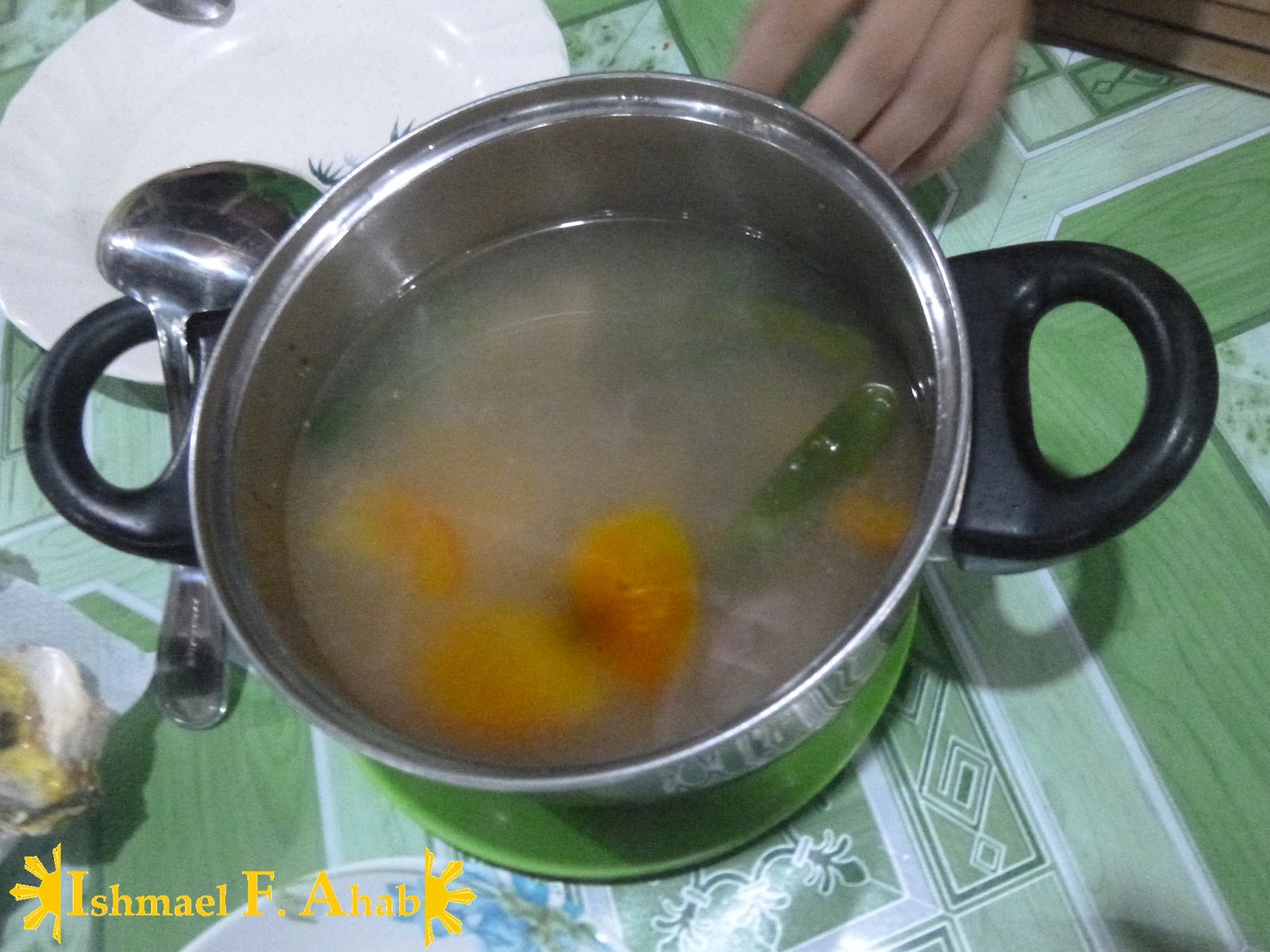
Tolang Mamsa from Consolacion, Cebu

…which the waitress served in a kaldero.

I didn’t know what mamsa is. A little Google search revealed that mamsa is talakitok in Tagalog and trevally in English. This is the fish that is featured in the 50-Philippine peso bill.

Our group also ordered kilaw na tanigue or mackerel cooked in vinegar.

Kilaw na tanigue in Consolacion, Cebu

And since kilawin is a certified pulutan, we also ordered some bottles of beer.

Our total bill is 695 pesos, which I think is not bad considering the number of dishes that we ordered.

Cost of our dinner in Consolacion, Cebu

However, I felt "lugi" with the talaba. I just ate two or three pieces of it. I should have eaten the shells para hindi naman ako lugi.

It was a good night. The bahay kubo style of the restaurant gave us a cool sea breeze. The talaba is fresh, although I cannot say that it is the best talaba in town. Our group enjoyed a fun conversation and I guess the beer helped us with that.

---

Read more about my latest adventure in Cebu:

Laag-Laag sa Cebu (Part 17): A Great View of Cebu City from Tops Busay
Laag-Laag sa Cebu (Part 16): A Taste of Mandarin in Cebu City
Laag-Laag sa Cebu (Part 15): Taboan the Pasalubong Center of Cebu City
Laag-Laag sa Cebu (Part 14): My Accidental Visit to Mt. Carmel Church
Laag-Laag sa Cebu (Part 13): Another Visit to the Cebu Metropolitan Cathedral
Laag-Laag sa Cebu (Part 12): Why Cebuanos Call Mama Mary as Birhen sa Regla?
Laag-Laag sa Cebu (Part 11): Sto. Niño Basilica - Mother and Head of All Churches of the Philippine Islands
Laag-Laag sa Cebu (Part 10): A Visit to the Fake(?) Magellan’s Cross
Laag-Laag sa Cebu (Part 9): The Story of Rajah Humabon - King of Cebu
Laag-Laag sa Cebu (Part 8): Calle Colon, the Oldest Street in the Philippines
Laag-Laag sa Cebu (Part 7): The Worst Cebu Hotel
Laag-Laag sa Cebu (Part 6): The Colorful Lighthouse of Lilo-an
Laag-Laag sa Cebu (Part 5): The Mysterious Church of Lilo-an
Laag-Laag sa Cebu (Part 4): Bagacay Point Lighthouse
Laag-Laag sa Cebu (Part 2): Finding Consolation in Consolacion Church
.

Laag-Laag sa Cebu (Part 2): Finding Consolation in Consolacion Church

The town of Consolacion is a dwarf compared to its neighboring cities of Cebu and Mandaue. I passed through this town in 2012 on my way to Danao City but I barely noticed it. This town is literally excluded in my mental map. 

However, thanks to a work-related errand, the town of Consolacion became my one-week residence and I got the chance to see it up close.

One of the things that immediately saw during my one-week stay is the SM Mall in Consolacion.

SM Consolacion in Consolacion, Cebu
This made me exclaim "Uy, may SM dito" :-P

Consolacion was once a barrio of Mandaue during the Spanish Era. This meant that the residents had to walk many hours to attend the Holy Mass or do their civil duties in the town center. I guess that the road to Mandaue back then was rough thus making their journey a sort of sacrifice.

In 1871, the Spanish governor granted their petition and made their barrio a separate town. The people were so grateful that they named the new town after the governor’s daughter - Consolacion.

They also chose St. Narciso, the namesake of the governor's wife Narcisa, as the town's patron.

Consolacion Church in Consolacion, Cebu

St. Narciso or Narcissus is the 30th bishop of Jerusalem during the 2nd Century. St. Narcissus is known for some miracles, one of which is the conversion of water into oil that was used by the church during Easter.

As its patron, St. Narcissus is the main feature of the church’s façade.

Image of St. Narcissus in Consolacion Church in Consolacion, Cebu

The church was first built in 1872 using wood, nipa, and bamboo. A typhoon in 1888 blew away the light materials thus totally destroying the church. Consolacion Church was rebuilt when Father Blas was the parish priest but it was again destroyed in 1892 by another typhoon. The third and current structure of Consolacion Church was built just before the Second World War during the time when Father Banzon was the parish priest.

St. Narcissus Parish Church in Consolacion, Cebu

Consolacion Church doesn’t look like the old churches of Cebu since it was built during the American Colonial Period. It already incorporated modern architectural motifs of the time. The Greek columns fronting the church echoes the architectural styles of the American Era building like the Manila Central Post Office, which is famous for its Greek columns.


The interior of Consolacion Church is also different from the old Cebu churches. It is very simple. The walls and the ceiling are adorned with minimal Catholic art.

Interior of Consolacion Church in Consolacion, Cebu

Some of the artworks that I found interesting include a relief of the Last Supper…

Bas-relief of the Last Supper in Consolacion Church (Consolacion, Cebu)

…and a painting of bread and fish and John 3:16 in Cebuano:

John 3:16 verse in Consolacion Church (Consolacion, Cebu)

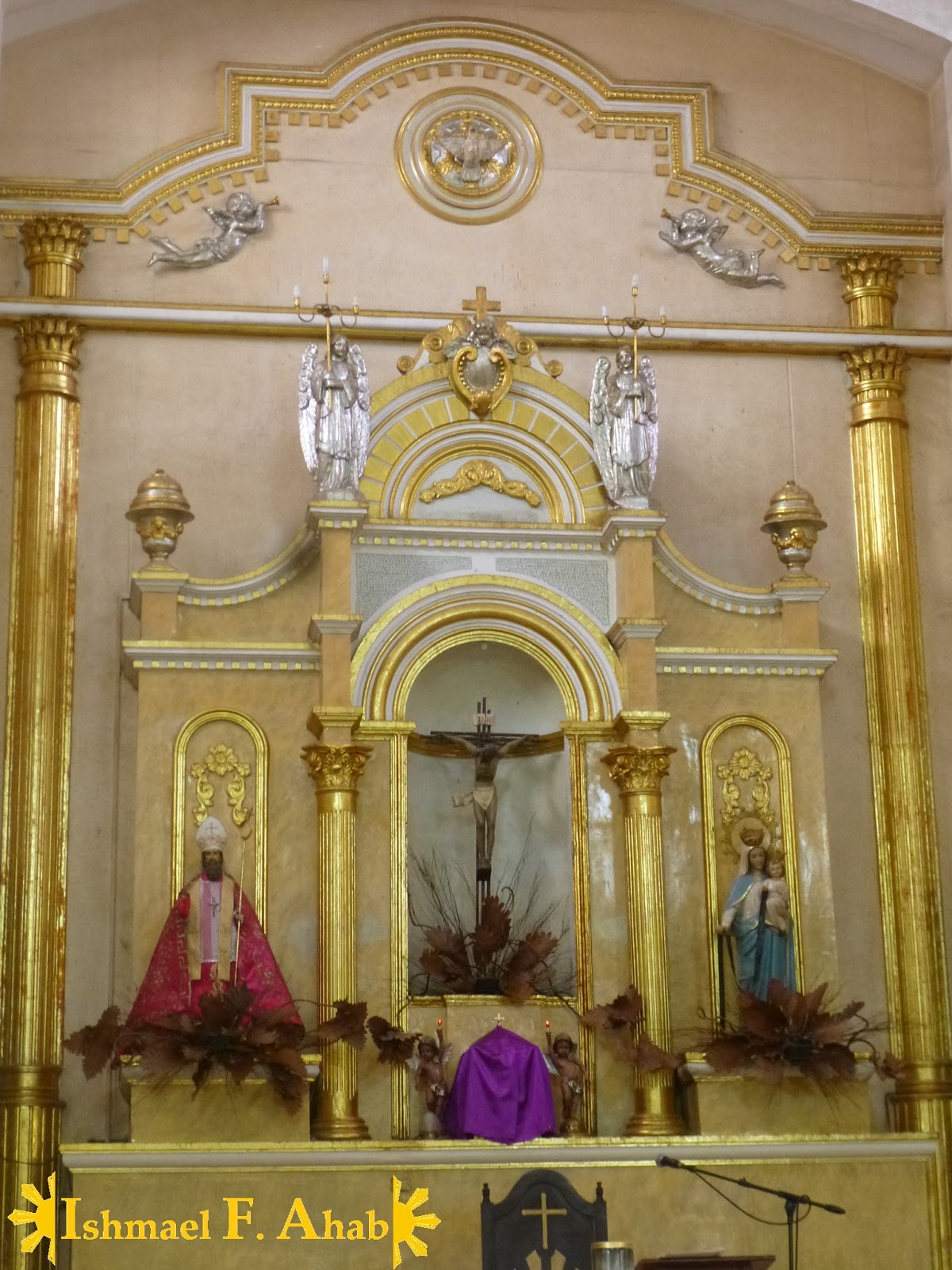
The altar of Consolacion Church is also simple.

The altar of Consolacion Church in Consolacion, Cebu

At the front is the simple image of Jesus Crucified, flanked by the image of the Virgin Mary and St. Narcissus.

The altar of Consolacion Church in Consolacion, Cebu

The simplicity of this church in Consolacion reminded of the church that I used to visit in Thailand.

Although, I still prefer churches loaded with beautiful Catholic arts, I think that simplicity works in church. And during my short visit there, this simplicity helped me to focus my attention to the Lord crucified at the altar.

The church is the only place that I visited during my stay in Consolacion. I know that there are more notable places but I guess I will just visit them when (and if) I return to Cebu.


---

Request for Prayers

Tarp for the beatification of Archbishop Camomot in Consolacion Church (Consolacion, Cebu)

The tarpaulin, shown in the above image, made we wonder who Bishop Camomot was and why it is posted inside Consolacion Church. A little Google search revealed that the bishop is being considered by the church for beatification.

The cause for beatification was opened because of Archbishop Camomot's great generosity and simplicity.  Cardinal Vidal said that Archbishop Camomot once pawned his pectoral cross (the cross worn by bishops around their neck) to help the needy.

The archbishop was also reported to have the ability to bilocate, which is the ability to be at two places at the same time. Cardinal Vidal testified that the archbishop was with him, sleeping, during a meeting with the College of Consultors. However, a woman claimed that at the same time Archbishop Camomot was at the mountain in Carcar giving the last sacrament to a dying person.

It was also reported that the dead body of Archbishop Camomot was incorrupt for 20 years.

Archbishop Camomot founded the religious community of Daughters of Saint Teresa in 1960.

The ability to bilocate and being incorruptible is amazing but what's more amazing was the archbishop's heroic generosity.

I am with the Cebuanos in their prayers for the beatification of Archbishop Teofilo Camomot.

---

Read more about my latest adventure in Cebu:

Interested about Philippine Catholic Churches? Read about them here.

---

Notes:

Most of the information about Consolacion and its church were sourced from the Official Facebook page of Consolacion Municipality.

Information about Archbishop Teofilo Camomot was sourced from the website of the Daughters of Saint Teresa.

Information about St. Narcissus was obtained from Catholic Online.
.