Showing posts with label Tabaco City. Show all posts

A Quick Peek at Tabaco Church

The grey Catholic church is the first landmark that I saw when our bus entered the poblacion of Tabaco City. Its massive structure is impressive and I vowed to visit this church. I was surprised when my companion asked me this question: “do you want to visit that church now?” It seems like he knows that visiting churches is part of my itinerary.

I answered “no” to his question. We came to Tabaco City to work and I placed work over my unofficial “sightseeing”. My time to visit this church will come so there is no rush to visit this church.
.
Tabaco Church, Tabaco City, Bicolandia

That time came in the afternoon of our first day in Tabaco City. I left our cheap hotel and proceeded directly to Tabaco Church. The Holy Mass is currently underway so the church is crowded.
.
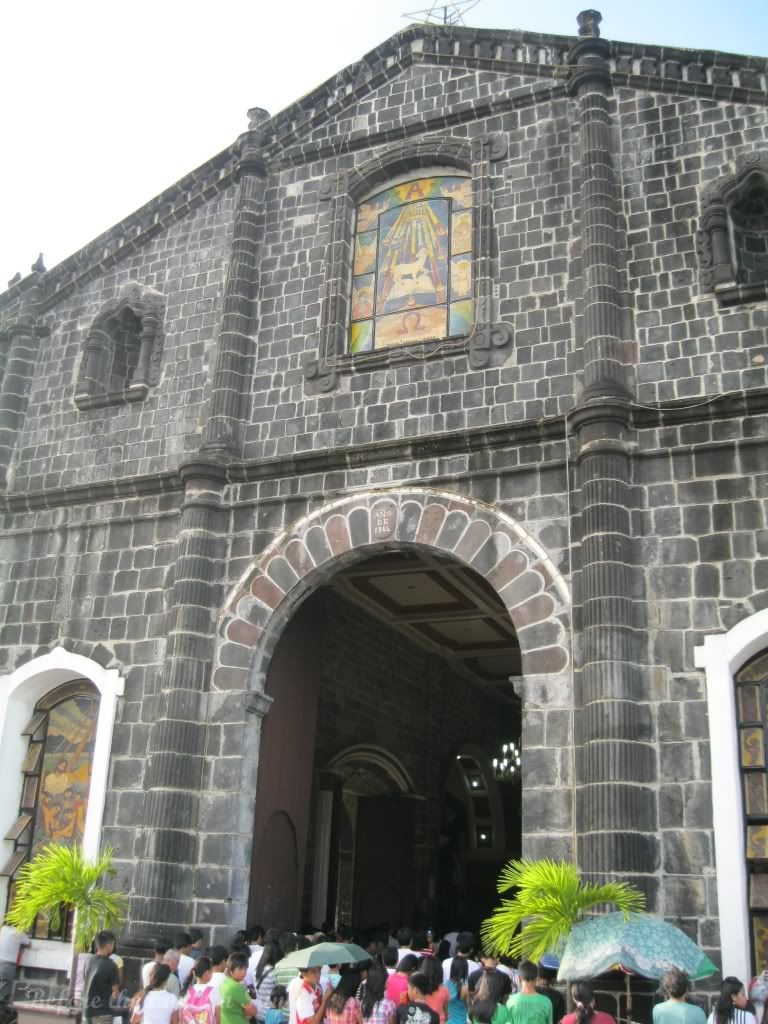
Tabaco Church (in Bicolandia) is crowded.

I failed to take photos of the interior of Tabaco Church because of the crowd. I just contented myself with taking photos outside of the church. The bell tower caught the attention of my camera.
.
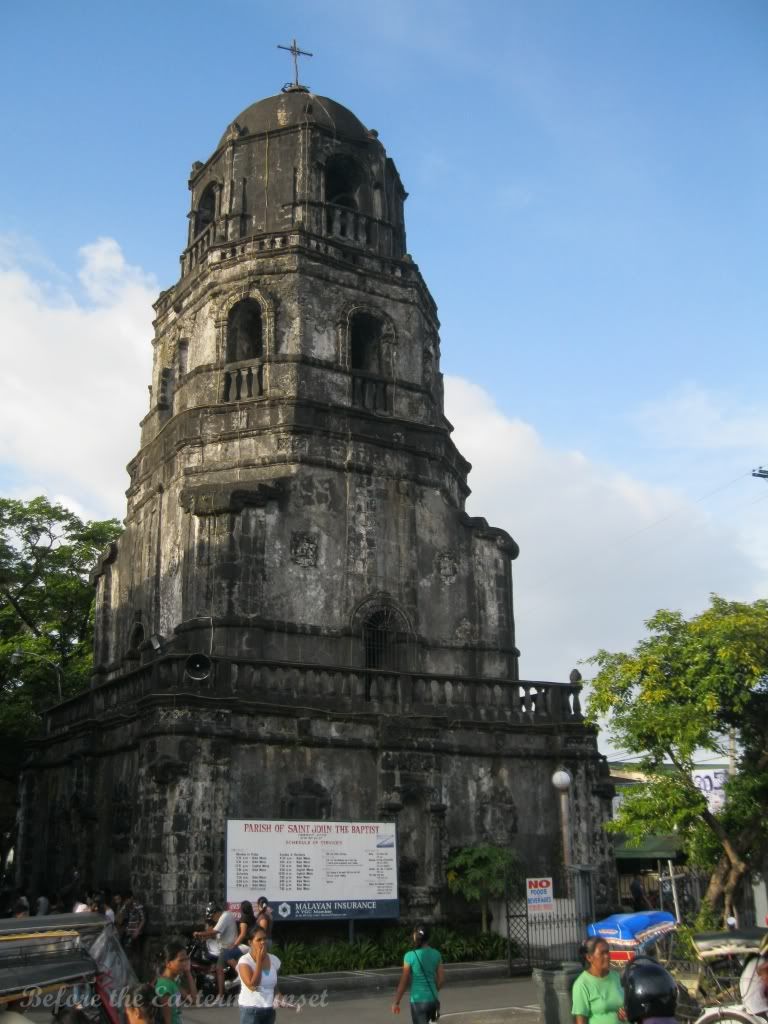
Bell tower of Tabaco Church, Bicolandia

The bell tower is old and grey like the church beside it. I noticed that the gate blocking the stairs leading to the top of the bell tower is ajar. I decided to climb without any permission.

The interior of Tabaco Church bell tower is dark and damp. Rubbles are everywhere and it seems like the place is in dire need of cleaning. Still, the place is the good place to take photos of Tabaco City. I took a good shot of the park in front of Tabaco Church.
.
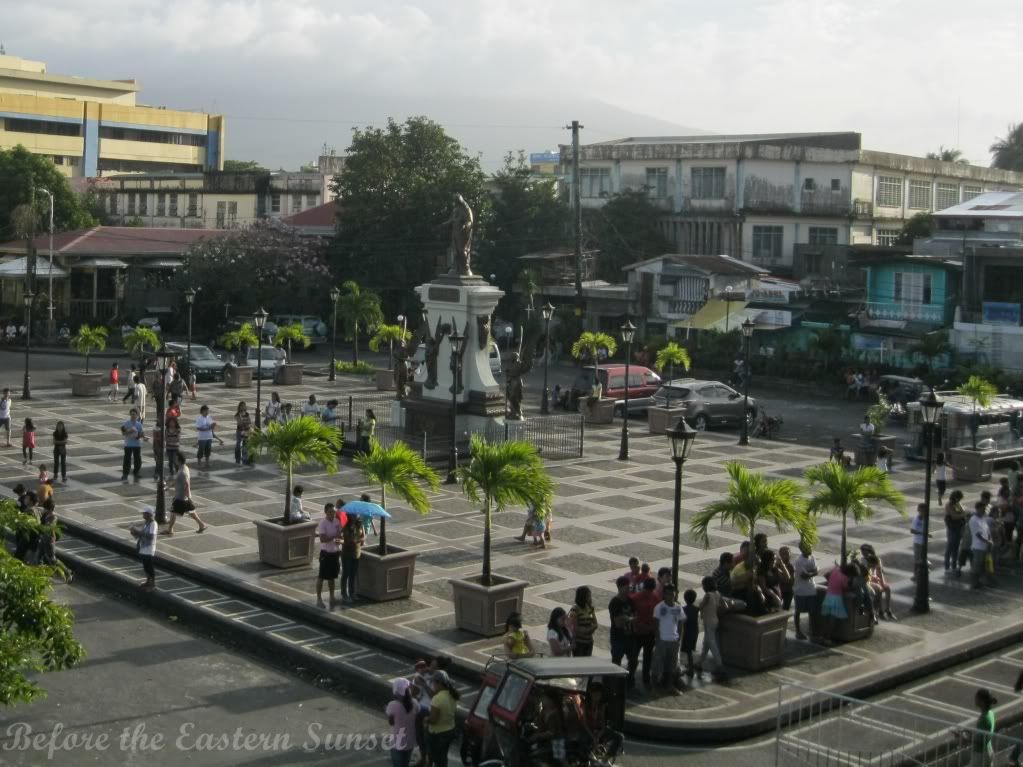
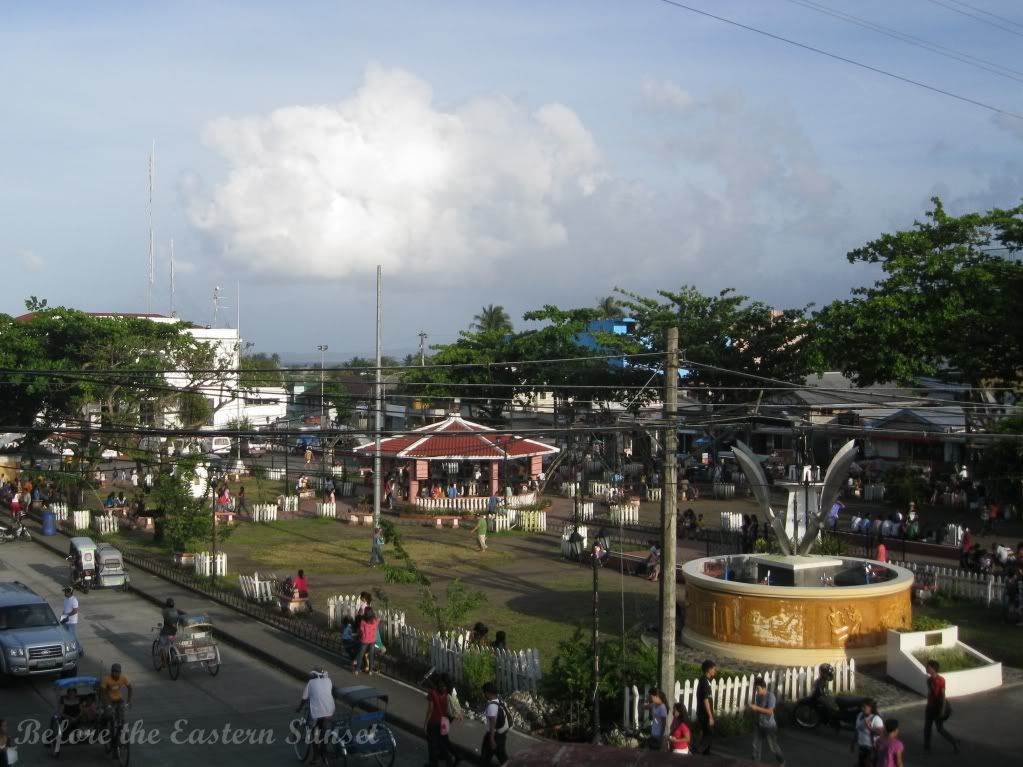
A park located in front of Tabaco Church, Bicolandia

The monument of “Christ the King” is located at the center of the park. Do you notice the angels surrounding Jesus Christ?

I also took this shot:
.
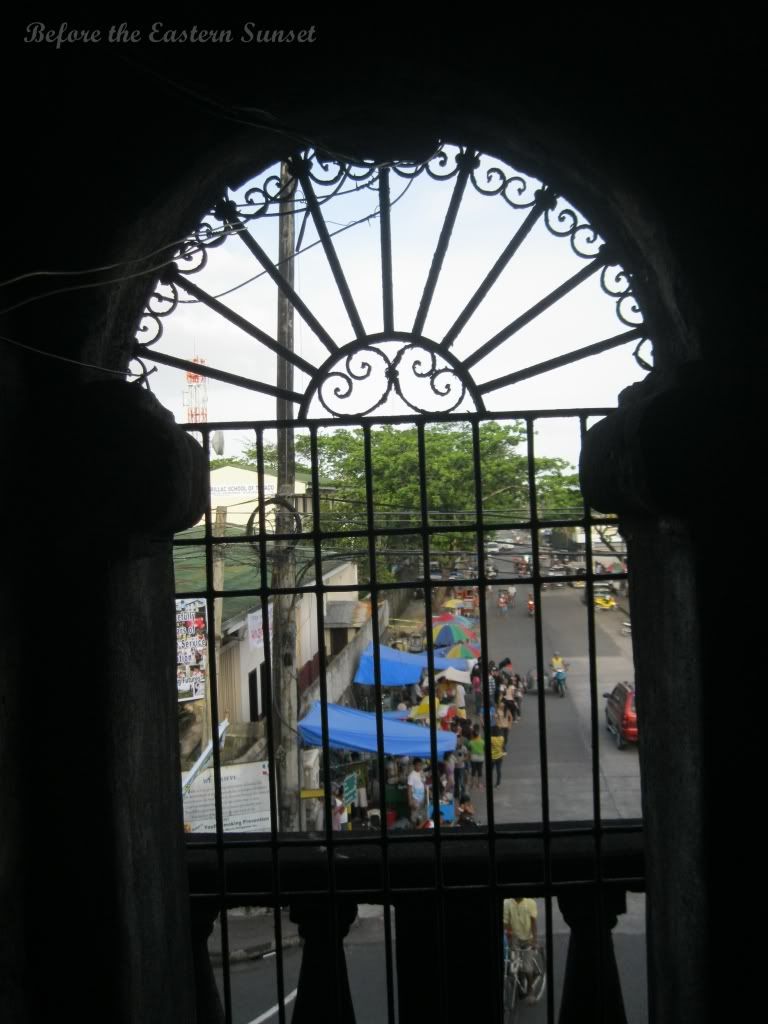
A shot of Tabaco City from the bell tower of Tabaco Church, Bicolandia.


I am about to take another photo when an old man suddenly appeared inside the bell tower. I thought that he will scold me and throw me out of the bell tower. He didn't.

The old man told me that the kampanero (ringer of the bell) is dead that's why no one cleans the bell tower. He is at the bell tower to fix the wirings in preparation for Semana Santa (Holy Week). I am grateful that he allowed me to continue taking photos.
.
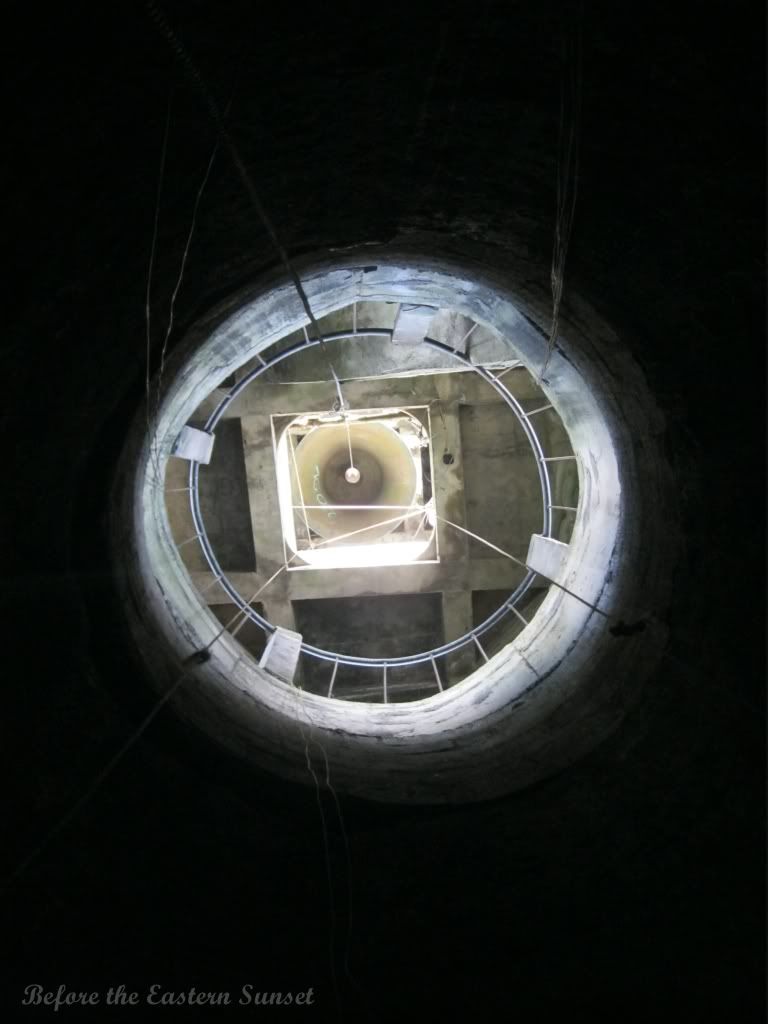
Bell of Tabaco Church, Bicolandia
Bell of Tabaco Church

The old man told me that the Tabaco Church was built through the donations of the parishioners. He told me that his grandmother and other TabaqueƱos donated blocks that were used to build the church. The original structure of Tabaco Church was established in 1616 but it was destroyed by the 1814 Mayon Volcano eruption. The current structure was built between 1864 to 1879.

I didn't linger long in Tabaco Church. I left after I made a mini-tour of the bell tower. I hope to see the interior of this church in the future.

Bicolandia's City of Tabak

Rows upon rows of tobacco plants is the first thought that came to my mind when I first heard about Tabaco City. That same thought also played in my mind while we were traveling from Bulan to Tabaco City. I imagined myself in the middle of a tobacco plantation with arms outstretched letting my palms touch tobacco plants while I walk.

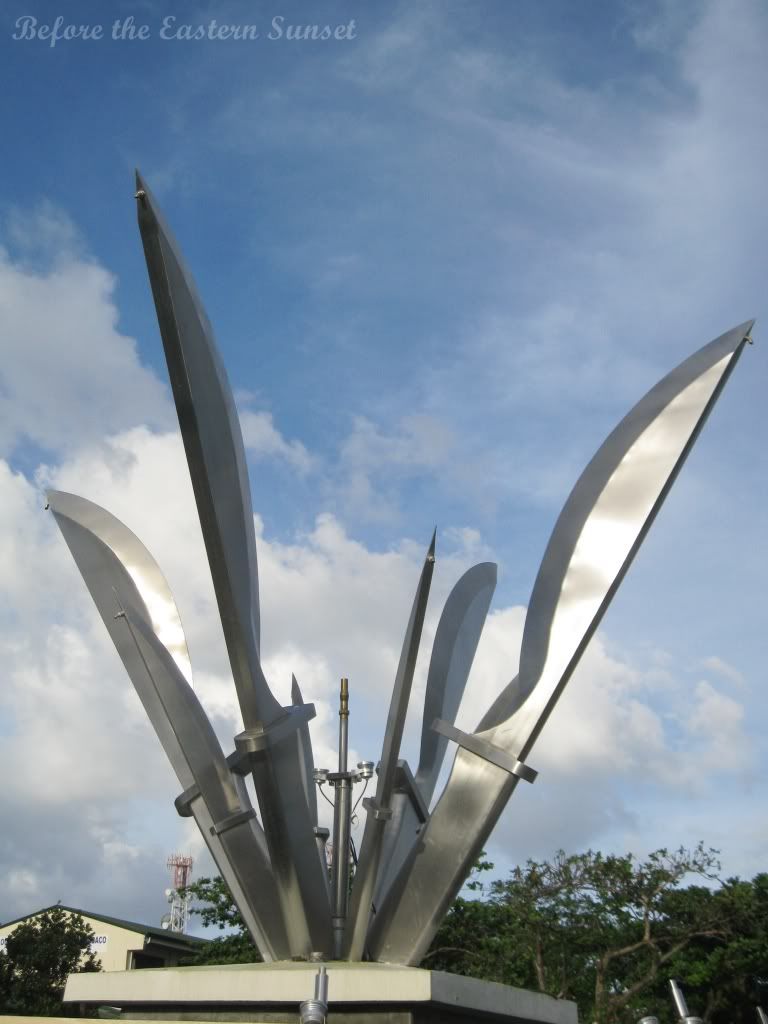
I was confused when I reached Tabaco City after half-a-day journey from Bulan. What I saw at the city park is a monument of tabak, which is a big knife being crafted in this city.
.
Tabak Monument of Tabaco City, Bicolandia
Tabak Monument at the park of Tabaco City.

The monument was established by the city government to show that the accepted origin of the Tabaco City's name came from the “Tabak ko! Tabak ko!” legend.

The legend says that some Spanish soldiers came to the place where Tabaco City now stood and asked a maiden about the name of the place. The overprotective father, thinking that the Spaniards will kidnap his daughter, shouted “Tabak ko! Tabak ko!” (My bolo! My bolo!). The Spaniards thought that the father is shouting the name of the place. Thus, the overprotective father's “Tabak ko” became Tabaco.

The legend supported by the Tabaco City government is very common and many places in the Philippines traced the origin of their name from the misunderstanding between the locals and Spaniards. Other historians claim that Tabaco City's name came from tobacco or tabaco as rendered in Spanish. Tobacco is the city's major product during the Spanish period.
I prefer the “tobacco” over the “tabak ko” etymology because it is more probable. Another reason is it's horrifying to imagine that I stand in the middle of a field of tabak with outstretched arms and my palms touching the blades. The tobacco plantation is more idyllic than a field of tabak.

Tabaco City began when Franciscan missionaries began their apostolic work in the area in 1587. Tabaco Church marked the flourishing of Catholicism in the area when its first structure was established in 1616. The church is one of the earliest structure in Tabaco City.

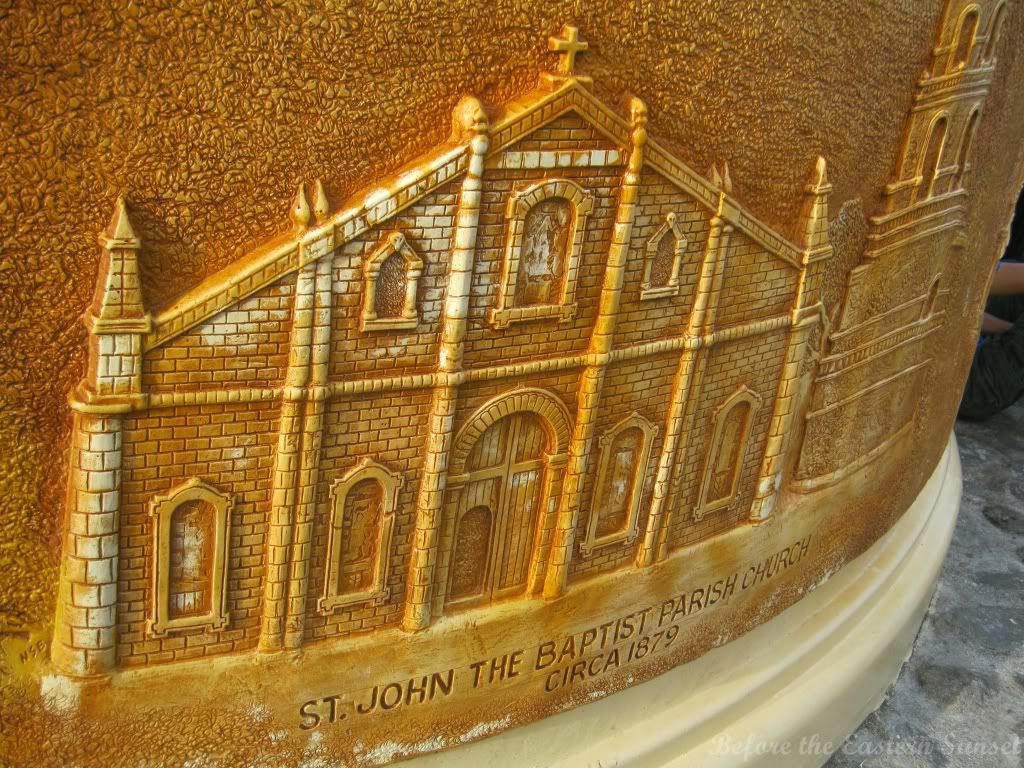
The heritage of Tabaco City was inscribed at the base of the Tabak Monument. Inscribed of course, is the Tabaco Church.
.
Bas relief of Tabaco Church, Bicolandia


I will feature Tabaco Church in the next post.

Another heritage inscribed on the monument is tabak making.
.
Tabak making in Tabaco City, Bicolandia


I didn't buy any tabak in Tabaco City. I was worried that the tabak might be confiscated at the airport.

The inscription that caught my eye is this:
.
Tabaco Pei Ching High School in Tabaco City, Bicolandia

I never thought that a Chinese school could be found in Tabaco City. Tabaco Pei Ching High School was established in 1920. One of the popular alumni of this school is the showbiz writer Ricky Lo. Too bad that I failed to take a quick peek at this school.

The city park is the best place to stroll during dusk. TabaqueƱos flock this park during the evening because it is located conveniently near the mall and Tabaco Church.
.
City park of Tabaco, Bicolandia

I stayed at this park in my first evening at Tabaco City. The air at park was cooler than our “airconditioned” room in a cheap hotel.

Another interesting building is a white house that I saw while I am on my way to Tabaco Port.
.
White house of Tabaco City, Bicolandia


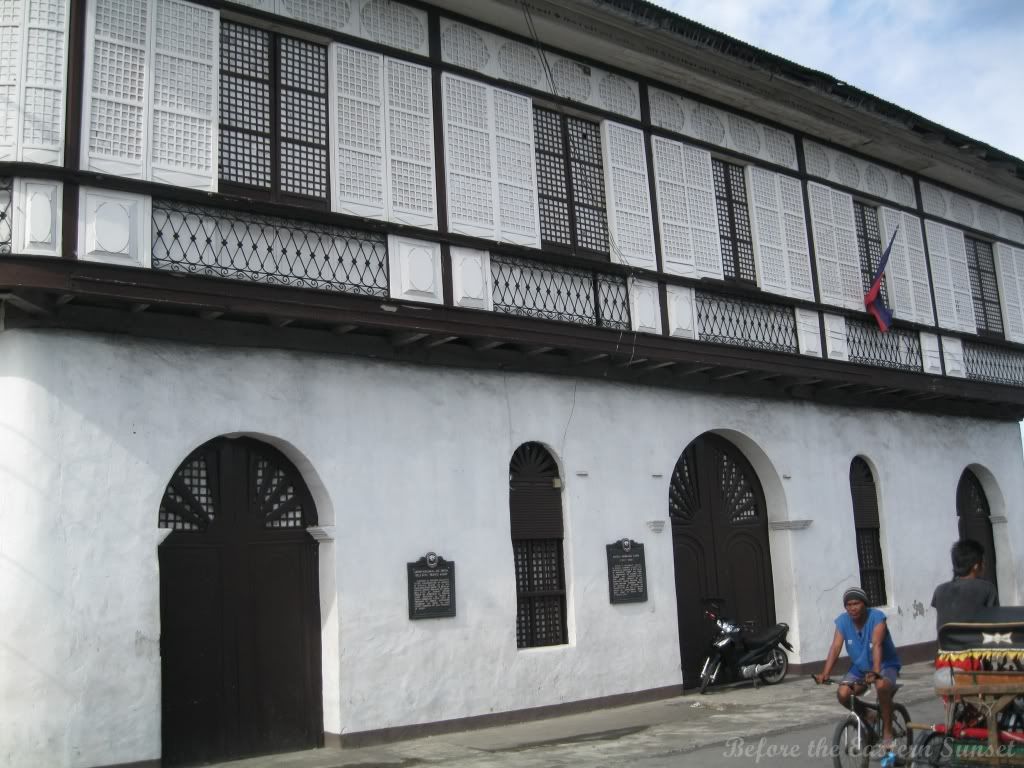
This white house is the house of the poetess Angela Manalang Gloria. I never know anything about this Filipina poet until I saw her house. Read more about Angela Manalang Gloria here.
.
House of Angela Manalang Gloria in Tabaco City, Bicolandia

The white house was established in the 19th Century by Mariano Villanueva. It was then owned and used as headquarters of Smith, Bell and Company. It was bought by the poetess in 1965. Aside from being the house of a poetess, this building was considered as one of the biggest house in Tabaco and the only remaining example of a house made of stone in Bicolandia dating to Spanish period.

It can be seen that Tabaco City is more prosperous than other towns, excluding Legazpi City, located around Mayon Volcano. The city is also rich in history and heritage. What made me sad is that the tobacco plantations are gone. My dream of touching tobacco plants didn't happen. I guess I have to go to Ilocos for that.